More than just thin, with an energy density as high as 900Wh/L: Decoding the technology of Power Glory's lithium manganese Pouch Cell batteries
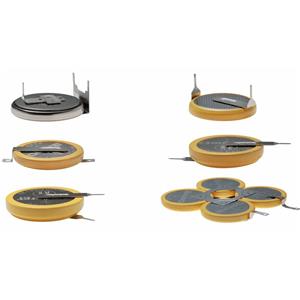
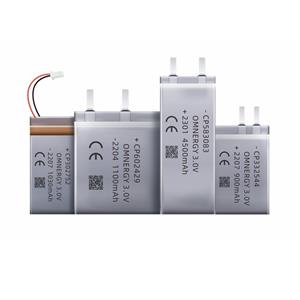
In today's world of increasingly miniaturized IoT terminals, smart wearables, and medical electronic devices, "how to pack more energy into a space the size of a fingernail" has become a core issue for the power supply industry. Leveraging its deep understanding of fundamental materials and innovative processes, Power Glory has launched a series of lithium-manganese pouch batteries with an energy density of up to 900Wh/L. This is not only a numerical breakthrough but also a profound reconstruction of micro-energy solutions.
Structural Innovation: How can the laminated process maximize the reaction interface?
For primary lithium-manganese batteries, improving energy density is essentially a trade-off with volume. Power Glory's R&D team started from the source of the electrochemical reaction, abandoning traditional approaches and adopting a "sandwich-like" laminated structure, successfully pushing the internal space utilization of the power supply to its theoretical limit.
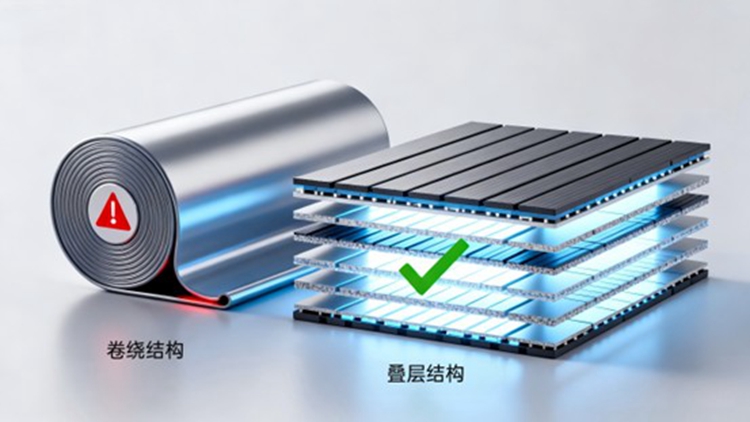
In this structure, lithium metal no longer serves as a current collector but participates purely as an active material in the reaction. This not only eliminates the safety hazards caused by lithium residue in traditional designs but also maximizes the reaction interface of the electrodes. Ultimately, Power Glory's pouch battery successfully achieved an energy density of 900Wh/L within the same volume. This means that compared to ordinary pouch batteries, Power Glory's products can pack more capacity into a thinner space, truly achieving "not just thin, but also powerful."
Behind the 900Wh/L figure lies Power Glory 's meticulous refinement of the laminated process. In the microscopic world, the uniformity of the battery's electrochemical reaction determines its lifespan and safety. Due to the uneven stress between the inner and outer layers at the bends, wound batteries are prone to wavy deformation of the electrode sheets during charging and discharging, resulting in uneven current distribution. In contrast, the laminated design adopted by Power Glory ensures that each layer of positive electrode, separator, and negative electrode is in a perfectly parallel state.
Low internal resistance and strong pulse: Why are they the ideal partners for IoT sensors?
According to Power Glory's patented technology, by laminating the positive and negative electrodes in a predetermined direction, the expansion force of each layer of electrodes tends to be consistent during charging and discharging, and the interface always remains flat. The direct advantage of this structure is a significant reduction in internal resistance. The laminating process shortens the electron path in the current collector, making Power Glory's Pouch Cell battery have a much lower internal resistance than similar competing products, and possessing excellent pulse discharge capability—which is undoubtedly the best partner for Bluetooth positioning tags or LoRaWAN sensors that need to transmit data signals instantaneously.
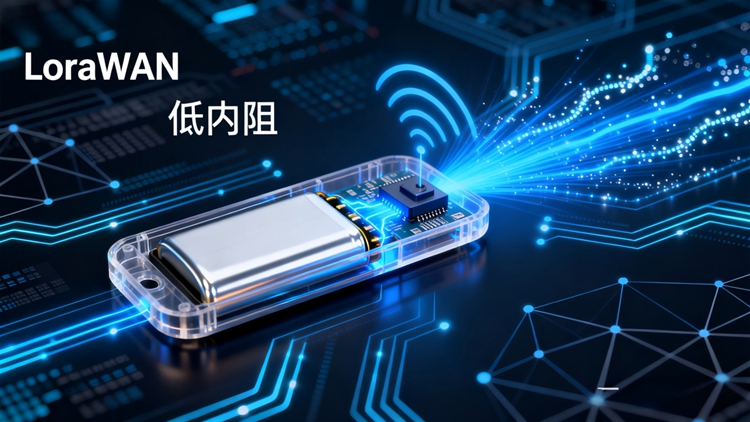
Furthermore, in terms of safety, the stacked structure combined with Power Glory's unique aluminum-plastic film encapsulation technology ensures that even if the battery experiences thermal runaway under extreme conditions, it will only "bulge" and will not explode like a hard-shell battery. High energy density often comes with compromises in environmental adaptability, but Power Glory's lithium manganese pouch cell battery breaks this conventional wisdom.
The secret to calmly facing harsh environments: ultra-low self-discharge of 1%.
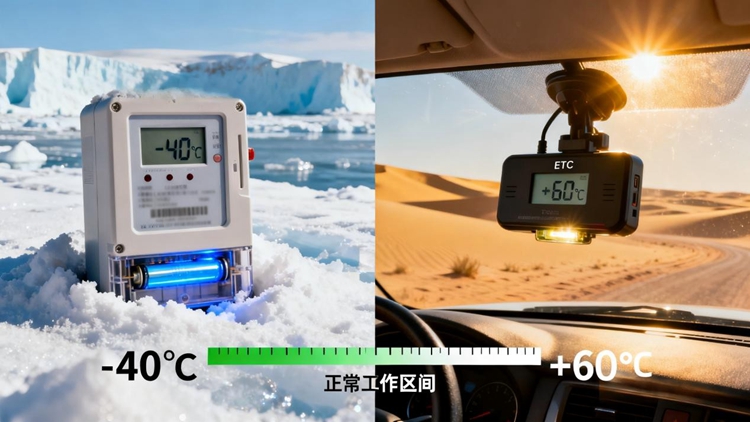
By optimizing the electrolyte system and dehydrating the cathode material, Power Glory's products can stably provide the operating pulse required by devices within a wide temperature range of -40℃ to +60℃. Addressing the issue of SEI film thickening due to interfacial side reactions during long-term storage of lithium manganese batteries, Power Glory effectively suppresses the increase in internal resistance during storage by constructing a graphite coating layer on the negative electrode side of the separator, resulting in an annual self-discharge rate of less than 1% at room temperature. This means that a Power Glory lithium manganese pouch battery, once installed in a smart meter or vehicle ETC system, can still guarantee "ready to use" even after the device has been exposed to extreme weather conditions such as direct sunlight or freezing for several years.
In the consumer electronics field, thinness and lightness are eternal pursuits; in the industrial IoT field, stability is the only truth. With its high energy density platform of 900Wh/L, Power Glory is redefining the boundaries of lithium manganese batteries.
Whether it's smart cards only a few millimeters thick, water meter modules requiring five years of continuous operation, or applications in smart industry and security, Power Glory lithium manganese pouch batteries offer highly competitive solutions. It's not just thin; it's that beneath its ultra-thin shell lies a tiny fraction of its power, squeezed out through a precise laminating process.
More than just "thin": Power Glory's solution for defining micro energy
From material innovation to structural optimization, from process breakthroughs to quality control, the 900Wh/L capacity is not only a milestone in Power Glory's technological journey, but also a microcosm of China's lithium manganese battery industry's transformation from "manufacturing" to "intelligent manufacturing." In the future, with the explosive growth of emerging applications such as smart meters, electronic tags, and medical patches, Power Glory will continue to be driven by technological innovation, providing global customers with smaller, lighter, and more powerful green energy.
We deeply understand that true technological strength lies not in the size of the data, but in the meticulous control behind the data.