From Mandatory Reserves to Market-Driven: The Irreplaceable Role of Primary Lithium Batteries in the Energy Storage Supercycle
According to statistics from the CNESA Global Energy Storage Database, in the first quarter of 2026, shipments of lithium-ion batteries for energy storage in China reached 215 GWh, a year-over-year increase of 139%. Leading companies generally have orders scheduled through the end of 2026, and some manufacturers’ production schedules have extended into the second quarter of 2027. The energy storage sector is transitioning from a policy-driven phase of “mandatory storage allocation” to a full-scale cycle of “explosive growth” driven by market demand. 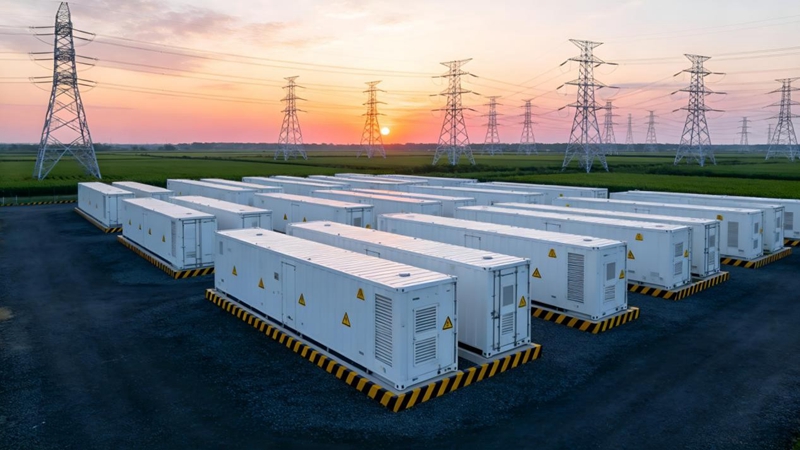
However, amid this wave of energy storage, a widely overlooked yet “essential” component is becoming increasingly prominent: primary lithium batteries. Critical functions of energy storage system BMS—such as RTC clock backup and safety valve status monitoring—rely on the quiet support of primary lithium batteries.
Primary lithium batteries are not a “backup” option, but a “necessity.”
The BMS “Watchman”: The Last Line of Defense in the Event of a Power Outage
The Battery Management System (BMS) is the “brain” of an energy storage system, overseeing core functions such as voltage acquisition, temperature monitoring, charge/discharge control, and balancing management. However, what many people don’t realize is that this “brain” also needs to be “protected” at times.
When the energy storage system’s main power supply is unexpectedly interrupted, the main control chip resets due to a fault, or the system is in a dormant state during transportation and storage, the BMS’s RTC (Real-Time Clock) module must continue to operate. The RTC is responsible for recording battery operation logs, timestamping abnormal events, and maintaining system time synchronization—records that are critical for fault tracing, lifespan assessment, and OTA updates.
If the RTC loses its time information due to a power outage, the entire BMS operation log will suffer a “time gap,” and root cause analysis of failures will lose a critical basis. For large-scale energy storage power plants, which often involve investments running into the billions, this is undoubtedly an unacceptable risk.
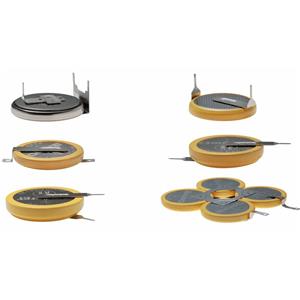
Currently, the mainstream RTC clock backup solution utilizes the CR2032 button-cell lithium-manganese battery. At room temperature, when paired with a low-power RTC chip, the CR2032 provides continuous power, ensuring the BMS remains “awake” under any abnormal conditions. When a power outage occurs in an energy storage container, this tiny CR2032 continues to quietly “stand guard,” recording the actual time down to the second. 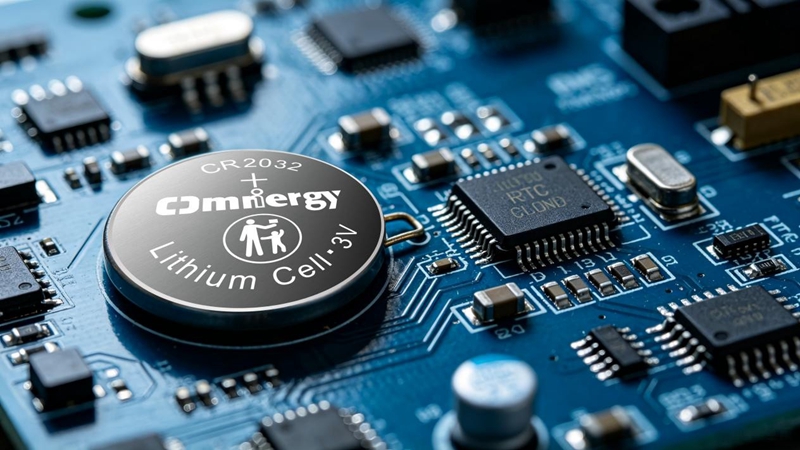
A similar scenario occurs in the safety valve control component of the BMS. Many leading companies have integrated safety valve status monitoring into their BMS systems, enabling them to issue early warnings the moment a safety valve opens, thereby effectively preventing battery thermal runaway. The continuous power supply for the safety valve monitoring circuit also relies on a primary lithium battery.
In the event of a power outage at an energy storage plant, the safety valve monitoring system must remain on standby, as thermal runaway often occurs precisely after the system loses power. If the monitoring circuit “goes dormant” due to the loss of the main power supply, an abnormal opening of the safety valve would go unmonitored, with potentially catastrophic consequences.
Power Glory: The “Hidden Champion” Behind Energy Storage BMS
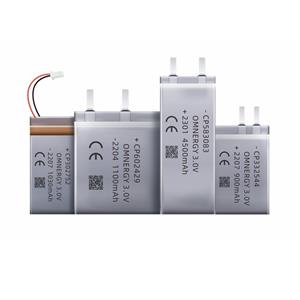
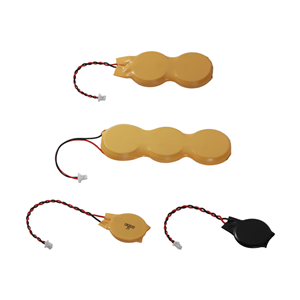
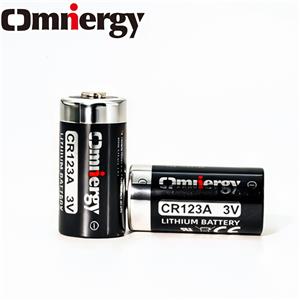
In the micro-power battery segment, Power Glory is quietly building its competitive moat. As a national-level “Little Giant” enterprise recognized for its specialization, refinement, uniqueness, and innovation, Power Glory has been active in the lithium micro-power battery sector since 2004, focusing on the R&D and manufacturing of primary batteries such as lithium-manganese button cells, lithium pouch cells, and lithium cylindrical cells. With a monthly production capacity of 66 million units, the company ranks among the top in China.
To address the demanding application environments of energy storage BMS systems, Power Glory has strategically developed multiple product series:
• CR2032 button cell: High-capacity design to meet the power endurance requirements of RTC modules;
• CR2450 button cell: Ultra-high capacity, suitable for smart BMS systems requiring higher power budgets;
• Wide-temperature lithium-manganese button cells: Designed for outdoor deployment in energy storage containers, these cells operate stably within a wide temperature range of -40°C to 85°C, ensuring the reliability of BMS backup power systems from the harsh winters of the north to the sweltering summers of the south. 
It is particularly worth noting that the entire product line from Power Glory features an extremely low annual self-discharge rate. Combined with advanced sealing technology and a leak-proof design, this ensures that the batteries maintain stable output throughout their design lifespan of several years. This means that energy storage system integrators and end-users can confidently design BMS backup power supplies as “install-and-forget” maintenance-free solutions, significantly reducing lifecycle O&M costs.
Conclusion: Choosing a reliable primary lithium battery is a solemn commitment to safety.
Power Glory strictly upholds quality standards, providing the most fundamental and stable assurance for the safe operation of energy storage systems. From RTC clock backup to safety valve status monitoring, and from logging during the transportation standstill period to fault tracing after abnormal power outages, Power Glory’s primary lithium-ion batteries consistently serve as the “last line of defense” for energy storage systems.