Power Glory: Bridging the "Last Centimeter" of IoT Power
Power Glory: Bridging the "Last Centimeter" of IoT Power
Have you ever encountered this scenario on your production line?
You procure a batch of bare-tab batteries, and workers must manually solder leads onto each one. If the soldering iron is too hot, the battery cell’s performance is compromised; if it’s too cool, you end up with "cold" (faulty) solder joints—the production line’s quality checks might show everything is fine, yet once the device is shipped, it suffers from frequent disconnections. Adding a battery holder could eliminate the need for soldering, but it inevitably increases the device’s overall thickness, raises costs, and introduces additional points of potential failure.
You might think that buying a battery is simply about "securing a power source," but the reality is different: for miniature smart devices, a "correct" battery purchase means one that fits perfectly, connects reliably, and lasts a long time. That "final centimeter"—the connection between the battery and the device—is precisely where problems are most likely to arise and where true engineering expertise is put to the test.
Power Glory—through its wholly-owned subsidiary, Yichang Power Glory Technology Co.,LTD., a nationally recognized "Little Giant" enterprise specializing in niche, high-tech sectors—leverages its in-house, self-developed capabilities in lead attachment, terminal/tab welding, multi-cell configuration (series/parallel), and card-mounted packaging. In doing so, they transform a "raw battery" into a "ready-to-assemble power component" that can go straight onto your production line.
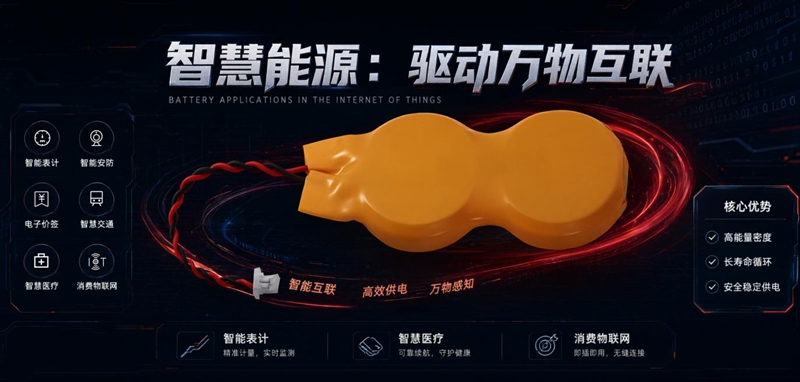
When sourcing batteries, you are essentially procuring power components rather than mere raw battery cells.
Selecting a battery involves two core dimensions: the chemical system, which determines runtime and discharge stability; and the physical configuration (form factor), which dictates how well the battery fits into the device assembly.
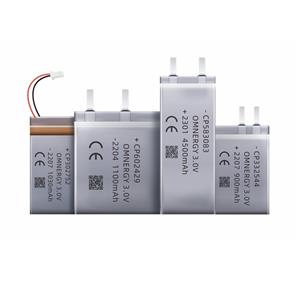
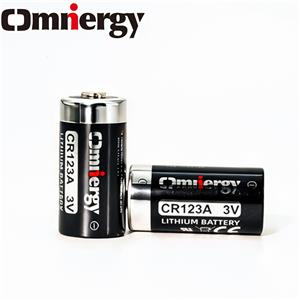
In terms of chemical systems, Power Glory specializes in lithium-manganese (MnO₂) coin-type micro-batteries. Its portfolio also encompasses a wide range of other solutions, including the BR series (lithium-carbon monofluoride), the CR-D series (for low-temperature environments), the CR-T series (for wide-temperature ranges), as well as lithium-manganese cylindrical and pouch cells, the ML series (rechargeable lithium-aluminum alloy batteries), and the LSC series (super lithium-ion capacitors). Whether for microamp-level standby sensor nodes or large-screen electronic shelf labels requiring high-pulse output, Power Glory offers a one-stop selection process.
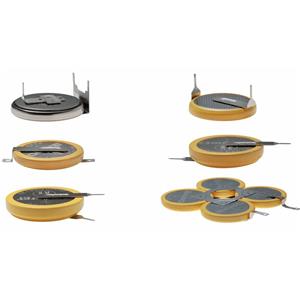
Advanced physical configuration—or "deep processing"—is what sets Power Glory apart from typical suppliers of bare battery cells. Building upon standard coin-type cells, Power Glory’s specialized production lines offer four types of custom configurations:
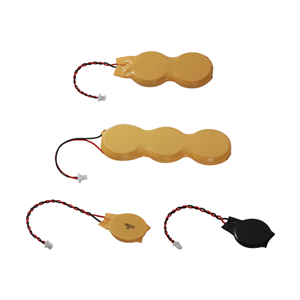
Batteries with leads: Precision-welded leads on the positive and negative terminals create a "battery-plus-lead" assembly ready for immediate use. This allows the battery to be placed in the optimal position within the device, with leads extending the power connection to the edge of the mainboard, providing greater design flexibility for the overall device structure.
Batteries with solder tabs (pins): Metal tabs are welded directly onto the cell, supporting both surface-mount (SMD) and through-hole (THT) assembly. This eliminates the need for a battery holder, thereby reducing both the device's overall size and its bill-of-materials (BOM) cost.
Integrated battery packs: Multiple cells can be connected in series or parallel to meet specific requirements. If a device demands higher voltage or greater capacity, there is no need to redesign the entire power architecture.
Customized packaging (carded/stripped): Packaging is tailored to the rhythm of the client’s production line, allowing for immediate assembly upon unpacking—significantly boosting operational efficiency on the assembly line.
All four major deep-processing operations are handled in-house, ensuring that both cell production and subsequent processing fall under a unified quality management system. Key parameters—such as lead-welding pull strength, electrical continuity, and sealing integrity—are strictly controlled by the original manufacturer. This eliminates ambiguity regarding accountability, a common issue when cell procurement and external processing are managed by separate entities.
Lead length, wire gauge, and terminal types can be customized to specific requirements, with dedicated support provided from initial selection through final implementation.
Deep processing does not compromise cell performance: Four key advantages of the Lithium-Manganese (Li-MnO2) system:
Regardless of the specific deep-processing configuration, the core performance of the battery remains consistent:
High voltage and high energy density: With a nominal voltage of 3V—approximately double that of standard dry-cell batteries—these cells deliver higher energy within the constrained space of miniature devices, meeting the lightweight requirements of IoT terminals that are only millimeters thick.
Stable discharge curve: A consistent voltage output over long periods prevents device malfunctions—such as false alarms, connection drops, or screen flickering—that might otherwise be caused by voltage decay.
Ultra-low self-discharge: Specialized encapsulation techniques keep the annual self-discharge rate below 2% (≤1% for the CR-HT series). With minimal capacity loss during storage, these batteries can provide stable power for three to five years once installed—provided the load current and operating temperature are within specifications. This makes them ideal for metering and security equipment, which often feature long shipping cycles or high maintenance costs for battery replacement, and supports long-term product warranties.
Wide temperature range: The standard CR series operates between -20°C and +70°C. For more demanding conditions, options include the CR-D series (optimized for ultra-low temperatures, down to approximately -55°C) and the CR-T/CR-HT series (designed for broad or high-temperature ranges, with the CR-HT series capable of reaching up to +125°C). These specialized series are engineered to handle diverse and challenging environments, from high-temperature server rooms in the south to the extreme cold of northern outdoor settings or the intense heat inside enclosed vehicle compartments.
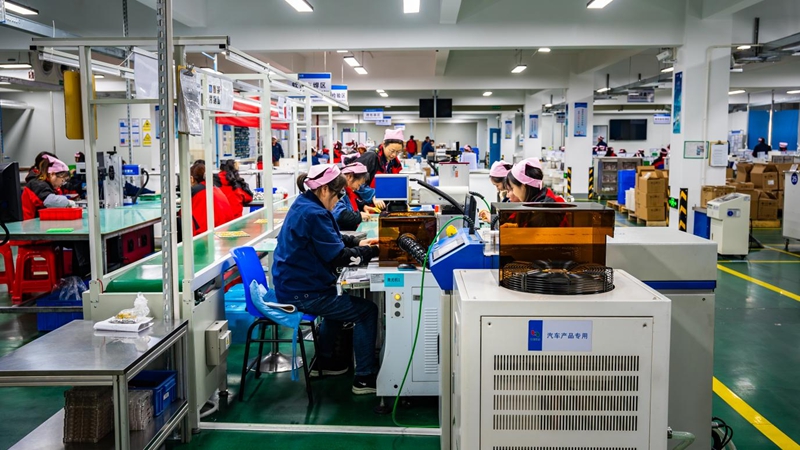
Advanced battery processing solutions address "hidden" on-site pain points across various industries.
The flexible form factor of these processed battery solutions offers greater freedom in equipment layout, providing significant value in numerous IoT applications:
Smart Metering: Replacing batteries in water, gas, or electricity meters often incurs costs related to on-site service visits and utility interruptions. Batteries with integrated leads and low self-discharge rates enable designs that require no battery replacement throughout the entire lifecycle of the meter.
Smart Security: Devices such as smoke detectors, door/window sensors, and water leak detectors are frequently installed in confined spaces like ceilings or door frames. Batteries with leads allow for the separation of the main unit from the power compartment, making them well-suited for such restricted installation environments.
Electronic Shelf Labels (ESL): In large-scale retail deployments, the ability to operate for long periods without battery replacement is a critical requirement. Batteries with leads or specialized mounting configurations—combined with stable discharge performance—ensure clear display updates and improve assembly efficiency on production lines.
Smart Transportation: For automotive applications, such as Tire Pressure Monitoring Systems (TPMS), batteries must meet IATF 16949 automotive standards and offer wide-temperature performance to withstand harsh vehicular operating conditions.
Smart Healthcare: Portable monitoring devices and tracking terminals for medical supplies demand high levels of reliability and regulatory compliance (UL, CE, RoHS). These processed battery components are fully traceable from the original manufacturer throughout the entire production process.
Consumer Electronics and IoT: In smart wearable accessories and various sensor nodes, welded tabs save space, while integrated leads simplify assembly—contributing to lighter product designs and an enhanced end-user experience.
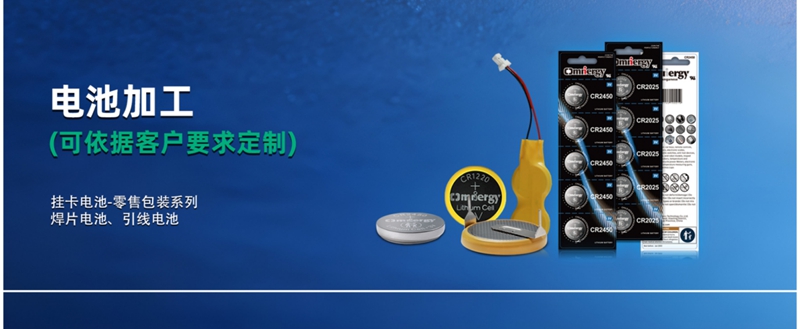
True expertise reveals itself in the final centimeter.
In the world of engineering, there is a simple equation: reliable equipment equals reliable chips multiplied by a reliable power source. Yet, a truly reliable power system requires one more critical component—a dependable electrical connection.
Next time your smart device quietly transmits a "heartbeat" signal in the dead of night, remember that tucked away in a corner of the circuit board, a lead wire or a solder tab is steadily delivering the necessary energy. The battery configuration you choose reflects the depth of a supplier’s understanding of that "final centimeter."
For advanced battery customization, look to Power Glory—whether it’s lead wires, solder tabs, integrated assemblies, or blister-card packaging, we provide batteries ready for immediate integration into your production line.