Power Glory CR1632: 16mm-diameter lithium-manganese coin battery, designed for space-constrained applications
Power Glory CR1632: 16mm-diameter lithium-manganese coin battery, designed for space-constrained applications
Not all product designs can accommodate a 20mm-diameter coin cell battery. While the CR2032 serves as the standard, go-to choice among lithium coin cells—and smaller variants cater to ultra-miniature applications—the CR1632 is a specialized solution designed specifically for space-constrained environments.
Devices such as car key fobs, remote entry systems, and compact smart locks feature highly condensed internal layouts. Similarly, medical devices like ear thermometers, blood glucose meters, and portable blood pressure monitors are engineered with slim profiles to ensure a comfortable, ergonomic grip. In the realm of the Internet of Things (IoT)—including wireless sensors for utility tunnels or electronic shelf labels—every millimeter of space within the battery compartment is critical.
Power Glory’s CR1632 is a power solution purpose-built for these types of space-constrained designs. Rather than replacing the CR2032, it fills a niche where the larger battery simply cannot fit. With a diameter of 16mm, a thickness of 3.2mm, and a capacity of up to 140mAh, the CR1632 strikes an ideal balance between ease of integration and long-lasting performance.
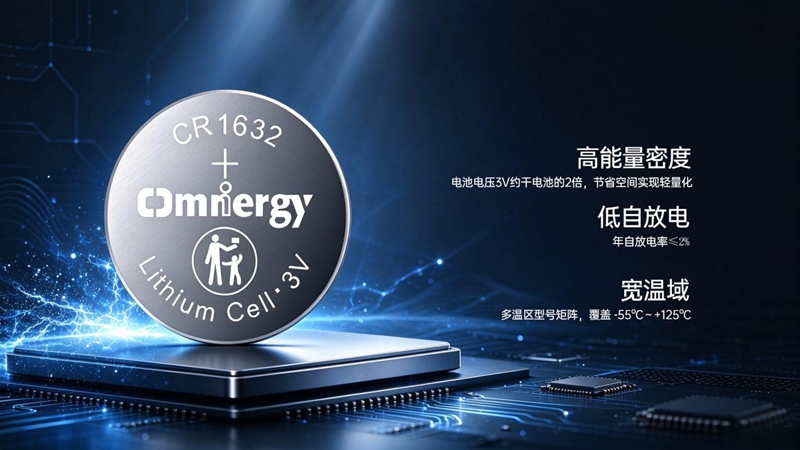
Core specifications: Same thickness, reduced diameter, and capacity precisely tailored for low-power applications.
The CR1632 designation corresponds to its dimensions: a diameter of 16 mm and a thickness of 3.2 mm. While it shares the same thickness as the CR2032, its diameter is 4 mm smaller—a difference that often serves as the critical threshold in structural design, determining whether an existing solution can be implemented or if new tooling (re-molding) is required.
The battery has a nominal voltage of 3V. Its nominal capacity is 120 mAh across standard, wide-temperature, low-temperature, and high-temperature variants, while the high-capacity version reaches 140 mAh—a leading figure for coin-type lithium batteries of this size.
In terms of electrical characteristics, it is designed for intermittent, low-power applications and backup power supply. The CR1632PH model supports a maximum pulse current of 10 mA, while the standard, wide-temperature, and high-temperature versions support 8 mA. This is sufficient for short-duration loads such as RF transmission, signal signaling, or instantaneous data writing.
Combined with an annual self-discharge rate of less than 2%, the battery is well-suited for low-power scenarios characterized by long periods of dormancy punctuated by brief wake-up intervals. In such cases, the system's average current draw remains far below the nominal operating current, enabling maintenance cycles that span several years. The actual service life depends on factors such as the frequency of wake-ups, the duration of transmissions, and the operating temperature.
Its primary advantage lies not in massive capacity, but in the optimal balance between physical dimensions and energy storage: it provides just the right amount of battery life for designs where space—specifically diameter—is constrained.
CR1632 vs. CR2032: Neither is inherently better; it’s all about the right fit for the application.
The CR2032 (φ20mm) is the standard, widely used specification. With a capacity of 220–245mAh, it is well-suited for devices that have ample battery compartment space and prioritize long battery life—such as motherboard RTC (real-time clock) circuits, large electronic shelf labels, and conventional smart locks.
If a product’s design is constrained to a φ16mm battery compartment, forcing the use of a CR2032 would lead to a series of issues, including reduced structural integrity, encroachment upon antenna clearance zones, and an increase in the device's overall thickness. In such cases, the CR1632 serves as a more appropriate engineering solution: it maintains the same thickness while its diameter fits the existing compartment. Although its capacity is only about 55%–60% that of a CR2032, it is sufficient to support a "sleep-trigger" low-power operating mode, covering a maintenance cycle of several years.
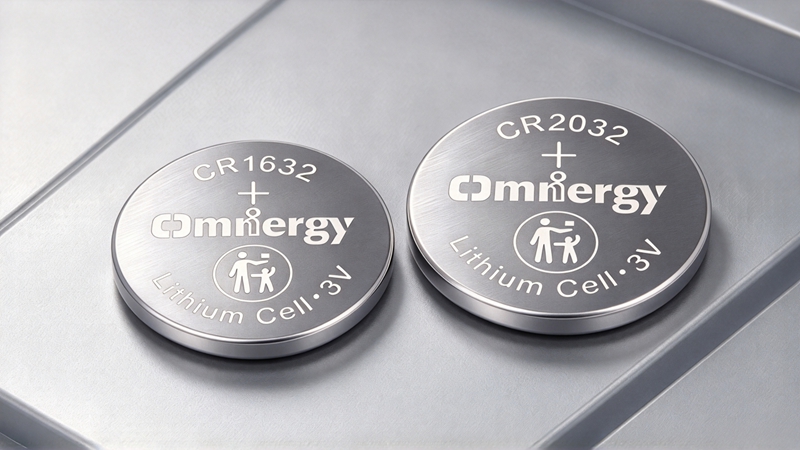
Multi-temperature-range model matrix: Same package, full coverage from -55°C to +125°C
The primary selection value of the CR1632 lies not only in its suitability for space-constrained applications (with a 16mm diameter) but also in the availability of a comprehensive product matrix—offering variants tailored for diverse temperature ranges while maintaining identical dimensions, pad layouts, and battery compartment requirements. This allows for adaptation to various environments—such as indoor settings, cold-climate outdoor locations, high-temperature automotive interiors, or industrial sites—simply by swapping the specific battery model, without requiring any structural modifications or PCB redesigns.
Power Glory CR1632 Full Series Models
Model | Capacity (mAh) | Max Pulse Current (mA) | Operating Temperature (°C) | Features |
CR1632 | 120 | 8 | -20 ~ +70 | Standard type, general industrial use |
CR1632PH | 140 | 10 | -20 ~ +70 | High-capacity type, high energy density |
CR1632T | 120 | 8 | -40 ~ +85 | Wide-temperature type, heat and cold resistant |
CR1632D | 120 | 8 | -55 ~ +60 | Low-temperature type, stable power supply in extreme cold |
CR1632HT | 120 | 8 | -40 ~ +125 | High-temperature type, automotive-grade high-temperature applications |
Standard consumer-grade CR1632 batteries typically operate within a temperature range of -20°C to +70°C; applications requiring a wider temperature range necessitate the selection of specialized models. Power Glory’s CR1632 product line—comprising standard, wide-temperature, low-temperature, and high-temperature variants—extends the overall operating range to between -55°C and +125°C. It should be noted that this does not mean a single battery functions across the entire temperature spectrum; rather, the diverse model matrix allows a consistent battery compartment design to accommodate various operating conditions.
Specifically, the CR1632HT model is designed for high-temperature environments ranging from -40°C to +125°C, making it suitable for compact automotive sensing applications such as Tire Pressure Monitoring Systems (TPMS). The Power Glory CR1632 series has obtained various international certifications, including UL, CE, RoHS, UN38.3, and IEC. This approach enables a single structural design to be used across different geographic regions and operational scenarios, thereby reducing costs associated with mold development and version management.
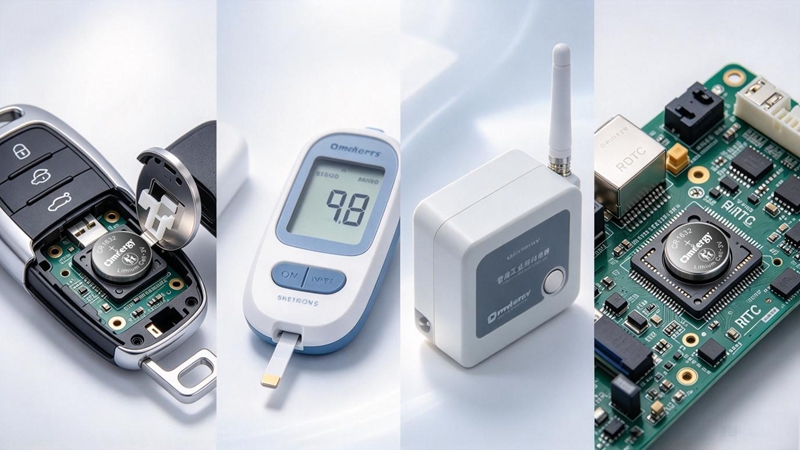
Typical Application Scenarios: Essential Power Sources for Space-Constrained Designs
Automotive and Security Remote Controls: Suitable for vehicle key fobs, motorcycle remotes, remote-controlled access systems, and compact smart locks—all of which can accommodate a φ16mm battery compartment. The high-temperature CR1632HT variant is designed for demanding automotive environments, such as Tire Pressure Monitoring Systems (TPMS), providing a reliable power solution for compact in-vehicle sensors.
Small Remote Controls and Portable Devices: Used in devices like roller shutter remotes, miniature remote controls, electronic watches, and calculators. These applications typically involve short bursts of high-current pulses followed by long periods of inactivity, necessitating both a compact form factor and excellent storage stability.
Portable Medical and Health Devices: Devices such as ear thermometers, blood glucose meters, and electronic blood pressure monitors generally remain in a sleep mode, waking up only for brief periods of use. While they do not require continuous high-current output, they must remain functional after long periods of standby. With an annual self-discharge rate of less than 2%, these batteries are well-suited for the long-term standby requirements of medical equipment.
IoT Sensor Nodes and Electronic Tags: IoT endpoints—including active/semi-active RFID tags, wireless sensor nodes, and electronic shelf labels—typically spend most of their time in sleep mode, waking up only periodically to transmit data. A capacity of 120–140mAh can support years of operation, helping to reduce maintenance downtime and labor costs in scenarios where devices are widely dispersed or difficult to access for battery replacement.
RTC (Real-Time Clock) Backup Power: Used for RTC memory backup on motherboards and small industrial control boards. While the CR2032 is the preferred choice when space allows, the CR1632 serves as an ideal backup power source for compact boards with limited space, ensuring that clock settings and configuration data are preserved during power outages.
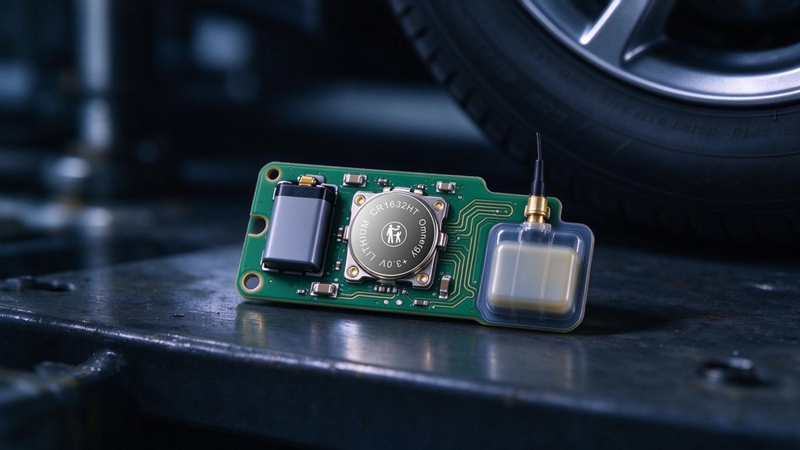
Industrial-Grade Delivery Foundation: Compact Batteries with End-to-End Reliability
Founded in 2004, Power Glory Battery Tech (Hubei) Co., Ltd. (Stock Code: 920237) specializes in the R&D and manufacturing of miniature lithium power sources. Its wholly-owned subsidiary, Yichang Power Glory Technology Co.,LTD., is recognized as a national-level "Little Giant" enterprise—a designation for specialized, refined, unique, and innovative firms—and a national high-tech enterprise. The company has participated in drafting five national standards for primary batteries, including "Primary Batteries – Part 1: General."
Leveraging mature production lines, our CR1632 batteries are available for stable, large-scale delivery. The products hold certifications such as UL, CE, RoHS, UN38.3, and IEC. With full-process traceability—from raw materials to finished goods—we ensure consistent capacity, internal resistance, and self-discharge rates across every batch. When customers choose our CR1632, they are not merely purchasing a 16mm-diameter coin cell; they are securing a comprehensive power supply solution characterized by long-term, stable availability, full traceability, and compliance with rigorous industrial and automotive-grade standards.
Power Glory’s CR1632: Compact in size, robust in its underlying system. We do not simply shrink a battery; rather, we distill over two decades of expertise in miniature lithium power manufacturing into a component engineered for space-constrained applications. Our end-to-end quality control system ensures that this battery—designed for tight spaces—not only fits perfectly but also delivers stable, reliable performance.